
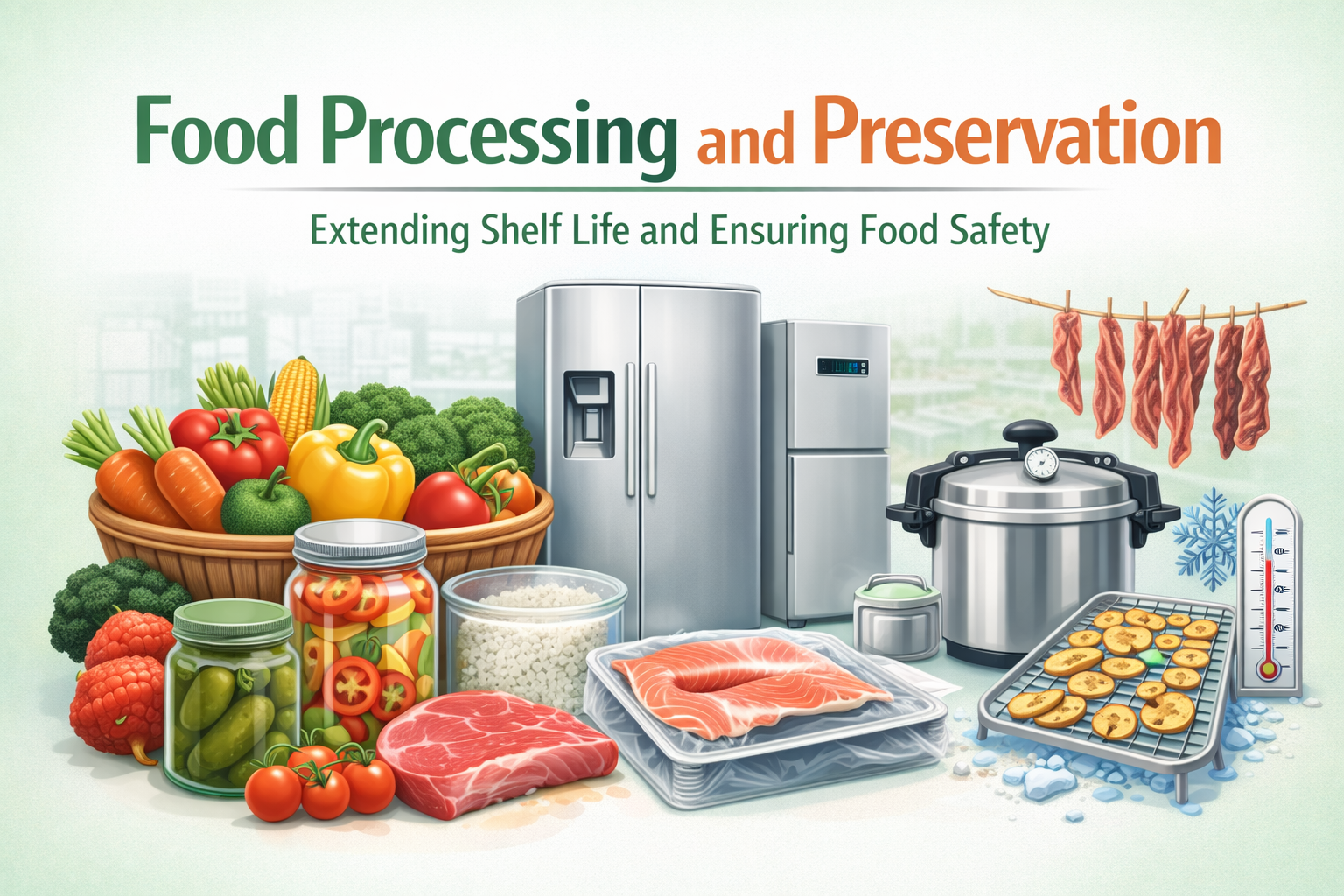
FOOD PROCESSING AND PRESERVATION
Food Processing and Preservation involves the transformation of raw food materials into safe, edible, and marketable products while extending their shelf life. The course focuses on methods used to reduce food spoilage, maintain nutritional quality, and ensure food safety through appropriate processing and preservation techniques. It equips learners with practical and theoretical knowledge required in food production.
LEARNING OUTCOMES
By the end of the course, the trainee should be able to:
1.Explain the principles of food processing and preservation.
2.Identify causes of food spoilage and methods of control.
3.Apply different food preservation techniques appropriately.
4.Demonstrate safe food handling and hygiene practices.
5.Evaluate the effects of processing and preservation on food quality and nutrition
CORE UNITS
1.Introduction to Food Processing and Preservation
2.Food Spoilage and Microorganisms
3.Traditional and Modern Preservation Methods
4.Food Processing Techniques
5.Packaging and Storage of Processed Foods
6.Food Safety, Hygiene, and Quality Control
SAMPLE INTERACTIVE ACTIVITY
1.Practical Demonstrations: Drying, freezing, or pickling of foods.
2.Group Discussions: Compare traditional and modern preservation methods.
3.Case Studies: Analyze food spoilage problems and suggest solutions.
4.Quizzes: Test knowledge on preservation techniques and safety rules.
5.Field Visits: Observe food processing and preservation practices in local industries.
- Teacher: Admin User